
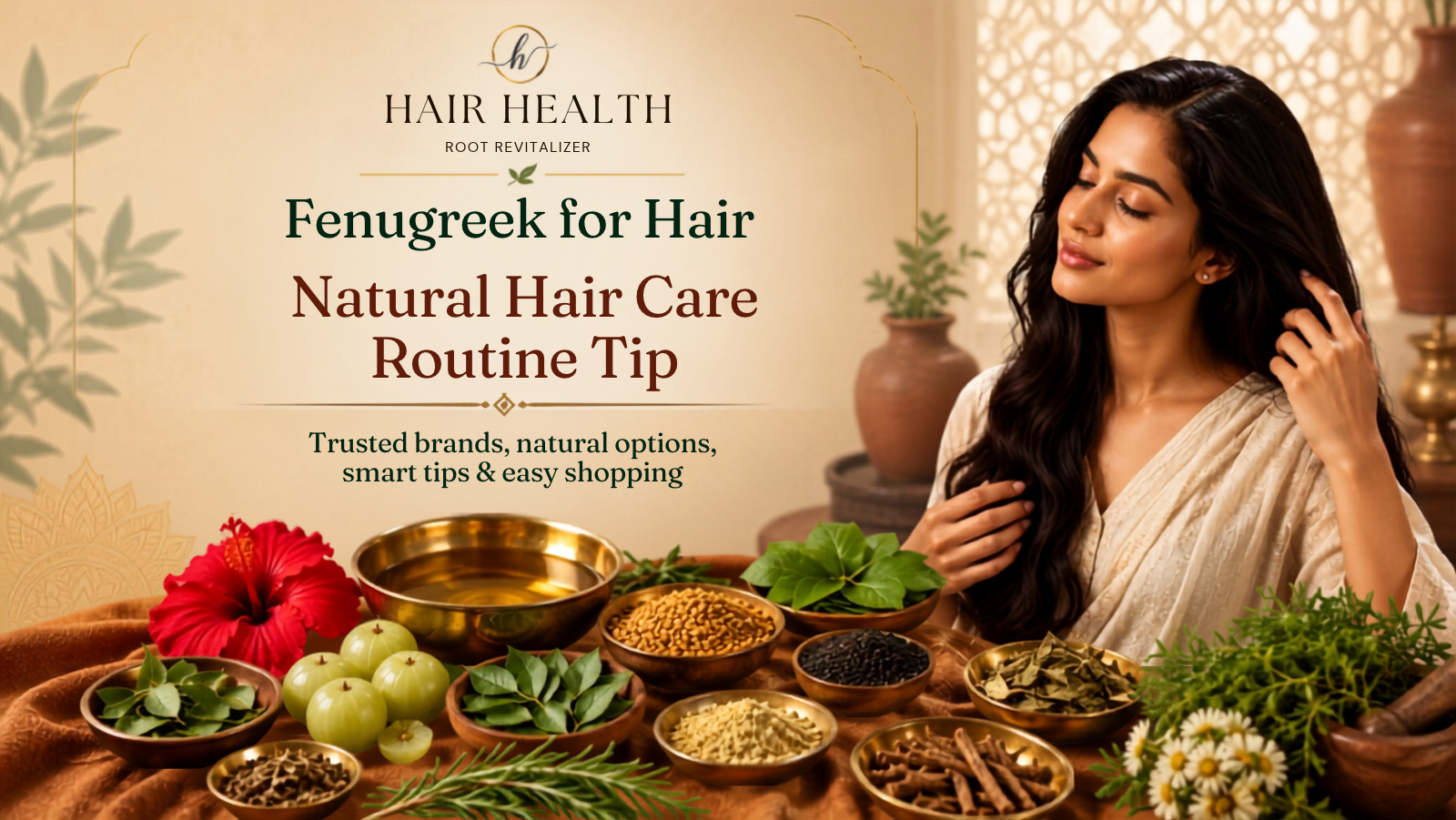
Fenugreek for Hair: How It Fits Into a Natural Hair Care Routine
Fenugreek has been used in traditional hair-care practices for generations, particularly in South Asian households. The small golden-brown seeds are commonly prepared as a paste, infused into oil, or incorporated into homemade hair treatments.
Today, Fenugreek for Hair remains popular among people looking for plant-based options to support scalp and hair maintenance. Its appeal comes from the seeds’ nutritional composition and their ability to form a mucilaginous, gel-like texture when soaked in water.
However, fenugreek works best as one component of a balanced hair-care routine rather than as a standalone solution for every hair concern.
What Makes Fenugreek Interesting for Hair Care?
Fenugreek seeds contain compounds including plant proteins, mucilage, fiber, and various micronutrients. When the seeds are soaked, they release a slippery substance that can make a homemade fenugreek preparation feel conditioning when applied to the hair.
This texture is particularly useful for people with dry or coarse hair because it can temporarily improve slip and make strands easier to handle during washing.
For scalp care, fenugreek is often used in traditional routines as a botanical ingredient rather than as a medical treatment.
Fenugreek for Hair and Scalp Conditioning
One of the most practical ways to use Fenugreek for Hair is as a conditioning treatment.
Soaked fenugreek seeds can be blended into a smooth paste and applied primarily to the scalp and hair lengths. The mucilage can provide a coating effect that makes the hair feel softer and more manageable after rinsing.
For dry hair, this type of treatment may be combined with a basic conditioner rather than replacing it completely.
Because homemade fenugreek paste can be difficult to rinse from dense hair, blending the seeds thoroughly and using a manageable quantity is important.
Can Fenugreek Help With Hair Fall?
Fenugreek is frequently promoted online as a natural remedy for hair loss. However, it is important to separate traditional use from established medical evidence.
Hair shedding can have many causes, including nutritional deficiencies, hormonal changes, stress, scalp conditions, genetics, medication, and physical or chemical damage.
Using fenugreek as part of a hair-care routine may help improve the cosmetic condition of the hair, but it should not be presented as a proven treatment for medical hair loss.
If shedding is sudden, excessive, or persistent, identifying the underlying cause is more important than relying on a homemade treatment.
Fenugreek for Dry and Rough Hair
Dry hair often needs better conditioning rather than more cleansing. Fenugreek can fit into this type of routine because soaked seeds produce a gel-like consistency that can improve the feel of the hair.
A simple fenugreek hair mask can be prepared by soaking the seeds overnight, blending them with water, and applying the resulting paste to damp hair.
Leave the mixture on for a limited period before rinsing thoroughly.
For particularly dry hair, a small amount of a suitable conditioning oil can be incorporated into the routine. Avoid using excessive oil because it can make the paste harder to remove.
Fenugreek and Scalp Care
A healthy-looking hairstyle starts with a scalp that is properly cleansed and cared for. Fenugreek can be included as an occasional botanical treatment, but it should not replace regular scalp cleansing.
If your scalp becomes oily quickly, leaving thick fenugreek paste on the scalp for too long may create unnecessary buildup.
Likewise, people with a sensitive scalp should introduce any homemade treatment cautiously. Natural ingredients can still cause irritation or allergic reactions.
A patch test on a small area of skin can help reduce the risk of applying an irritating mixture across the entire scalp.
How to Make a Simple Fenugreek Hair Mask
A basic fenugreek treatment requires only a few steps.
Ingredients
- 2–3 tablespoons of fenugreek seeds
- Water for soaking
- A small amount of plain conditioner or a suitable hair oil, if desired
Preparation
- Place the fenugreek seeds in a clean bowl.
- Add enough water to cover them completely.
- Allow the seeds to soak overnight.
- Drain excess water and blend the softened seeds into a smooth paste.
- Add a small amount of conditioner if the mixture is too thick.
- Apply the mixture to the scalp or hair lengths according to your hair-care needs.
- Leave it on for approximately 15–30 minutes.
- Rinse thoroughly and follow with your normal conditioner if needed.
The consistency should be smooth enough to spread without requiring vigorous rubbing.
Fenugreek-Infused Hair Oil
Another traditional method is preparing fenugreek-infused oil.
Fenugreek seeds can be gently infused into a carrier oil such as coconut or another suitable plant-based oil. The finished oil can then be used as a pre-shampoo treatment.
Apply a small quantity to the scalp and hair lengths, massage gently, and wash it out with shampoo.
The important point is moderation. Saturating the scalp with oil does not automatically provide greater benefits and can make cleansing more difficult.
How Often Should You Use Fenugreek?
There is no universal schedule for Fenugreek for Hair because hair texture and scalp condition differ.
For most people, an occasional treatment is more practical than daily application. Once a week or every couple of weeks can be incorporated into a broader routine depending on how the hair responds.
If the hair becomes stiff, coated, greasy, or difficult to rinse, reduce the frequency.
The purpose of a botanical treatment is to complement your existing routine, not create another source of buildup.
Who Should Be Careful With Fenugreek?
Fenugreek may not be appropriate for everyone. People with highly reactive skin or known allergies to fenugreek should avoid topical use.
If you experience burning, redness, swelling, persistent itching, or discomfort after applying a fenugreek preparation, rinse it off and discontinue use.
Homemade mixtures should also be prepared with clean utensils and stored appropriately. Fresh preparations are preferable because water-based homemade treatments can spoil when stored for extended periods.
Combine Fenugreek With a Complete Hair-Care Routine
Fenugreek works best when it is combined with fundamentals that have a bigger impact on everyday hair condition.
A practical routine includes:
- Gentle scalp cleansing
- Regular conditioning
- Limited high-heat styling
- Careful detangling
- Protection from excessive environmental exposure
- Adequate dietary nutrition
- Avoiding unnecessarily tight hairstyles
- Choosing products suited to your scalp and hair type
Think of fenugreek as an optional botanical addition rather than the foundation of your routine.
Final Thoughts
Fenugreek for Hair can be a useful traditional ingredient for people interested in plant-based hair-care routines. Its soaked, gel-like texture makes it particularly interesting for conditioning dry or rough hair, while fenugreek-infused oil can be used as an occasional pre-shampoo treatment.
However, natural does not automatically mean risk-free, and fenugreek should not be treated as a guaranteed solution for hair loss or scalp disorders.
Used thoughtfully and alongside consistent cleansing, conditioning, and gentle styling practices, fenugreek can fit comfortably into a simple natural hair-care routine.