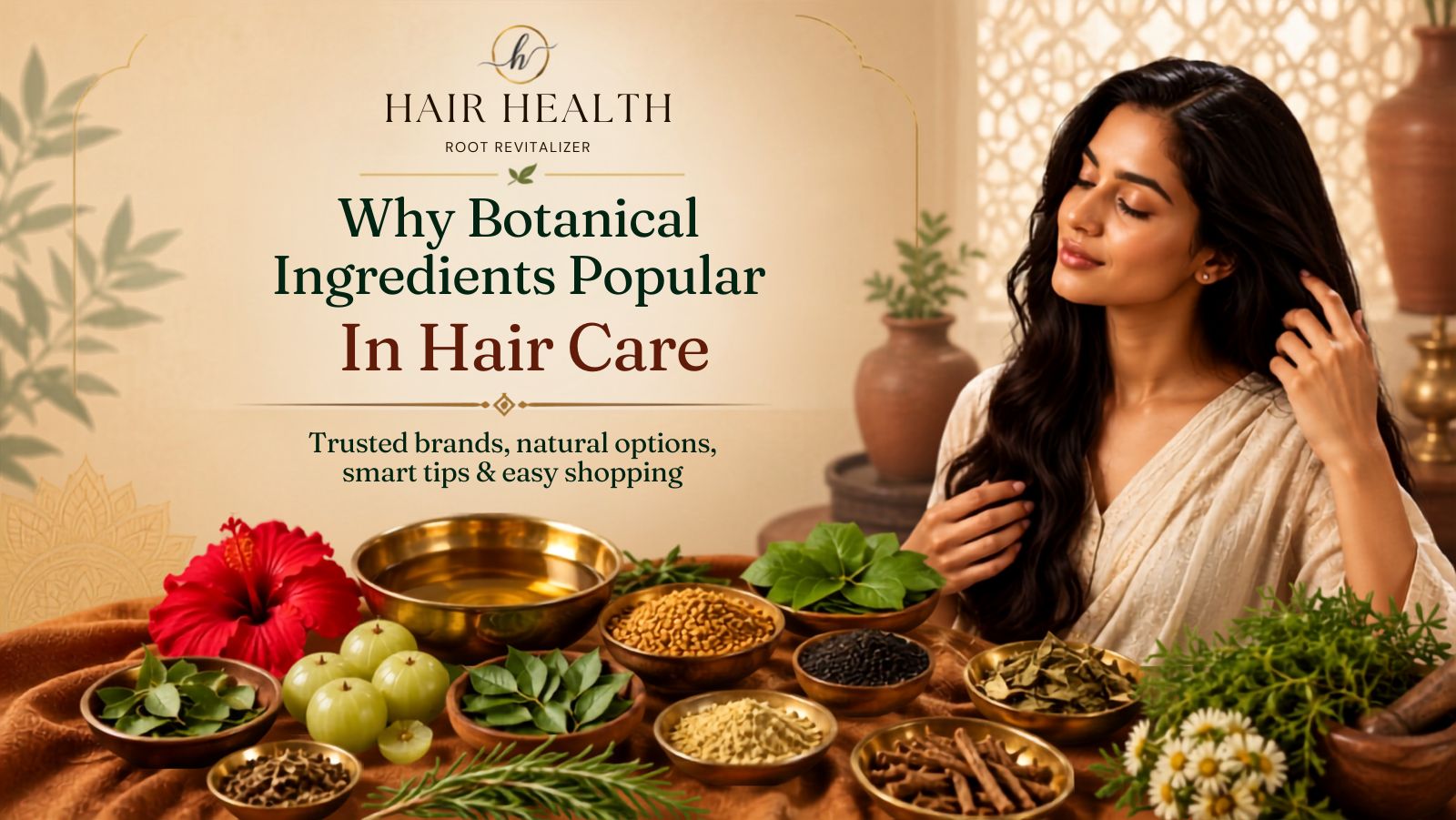
Why Botanical Ingredients Are Becoming Popular in Modern Hair Care
Hair care is shifting from quick cosmetic fixes toward ingredient-conscious routines that focus on the condition of the scalp, hair strands, and protective barrier. One of the most noticeable changes is the growing interest in botanical ingredients. Plant-derived oils, extracts, herbs, roots, flowers, and seeds are increasingly being incorporated into shampoos, conditioners, scalp treatments, serums, and hair oils.
This growing preference is not simply about choosing products labelled “natural.” Consumers are paying closer attention to what goes into their hair care formulas and how individual ingredients interact with the scalp and hair fiber.
What Are Botanical Ingredients?
Botanical ingredients are substances derived from plants and used in personal care formulations for their functional properties. They can come from leaves, flowers, roots, seeds, fruits, bark, or plant oils.
Common examples used in hair care include:
- Rosemary extract
- Aloe vera
- Hibiscus extract
- Fenugreek
- Amla
- Neem
- Coconut oil
- Argan oil
- Jojoba oil
- Castor oil
- Peppermint
- Green tea extract
Different botanical materials contain different naturally occurring compounds. Plant oils can supply fatty acids and lipids, while certain botanical extracts contain polyphenols, flavonoids, antioxidants, or other bioactive compounds.
The key point is that botanical ingredients aren’t a single category with a universal effect. Their properties depend on the plant source, extraction method, concentration, formulation, and intended use.
Why Are Botanical Ingredients Gaining Attention?
1. Consumers Are Reading Ingredient Labels More Carefully
Modern hair care shoppers increasingly want to understand a product’s formulation rather than choosing based solely on fragrance, packaging, or marketing claims.
Terms such as rosemary, amla, aloe vera, argan, jojoba, and hibiscus are familiar to consumers who want plant-derived components in their routines. This has increased demand for formulas that clearly communicate their botanical composition.
For brands, this means ingredient transparency has become an important part of product positioning. For consumers, it creates an opportunity to select products according to their specific scalp and hair needs.
2. Botanical Ingredients Can Support Scalp-Focused Hair Care
Healthy-looking hair starts with an adequately maintained scalp environment. Excess sebum, accumulated styling residue, dryness, and environmental exposure can all affect scalp comfort and hair-care routines.
Certain botanical ingredients are selected specifically for scalp formulations because of their cleansing, conditioning, soothing, or antioxidant properties.
For example, aloe vera is commonly used in scalp and hair formulations for its conditioning and soothing characteristics, while rosemary and peppermint are frequently incorporated into scalp-oriented products.
However, a botanical ingredient should not automatically be considered suitable for every scalp. Essential oils and concentrated plant extracts can cause irritation in sensitive individuals, particularly when improperly diluted.
3. Plant Oils Provide Lipid-Rich Hair Conditioning
Hair strands contain a complex structure of keratin and lipids. Repeated washing, heat styling, chemical processing, and environmental exposure can leave hair feeling rough or dry.
Plant oils are popular because many contain fatty acids and other lipid components that can improve the feel, manageability, and surface conditioning of hair.
Botanical ingredients such as coconut oil, argan oil, jojoba oil, and castor oil are therefore commonly found in hair oils, masks, conditioners, and leave-in products.
Their roles can vary considerably. Some oils are lightweight and suited to finishing or conditioning, while others create a richer coating that may work better for dry, coarse, or textured hair.
Botanical Ingredients vs. Harsh Hair Care Formulas
The popularity of botanical formulations is also connected to growing concern about excessive use of aggressive cleansing or styling products.
This does not mean that every synthetic ingredient is harmful or that every botanical ingredient is automatically gentle. Modern cosmetic chemistry uses both naturally derived and synthetic materials, and the safety of a formula depends on the ingredients, concentrations, formulation, and intended application.
The more useful approach is to evaluate the complete ingredient profile rather than assuming “plant-based” equals “better.”
A well-formulated botanical hair product should balance plant extracts and oils with appropriate cleansing agents, preservatives, stabilizers, and conditioning components where required.
Popular Botanical Ingredients Used in Hair Care
Rosemary
Rosemary is one of the most recognizable botanicals in modern scalp care. Rosemary extract and rosemary oil are used in various scalp products, particularly formulations designed around scalp conditioning and hair-care routines.
Because essential oils are highly concentrated, rosemary essential oil should generally be properly diluted before topical use.
Amla
Amla, also known as Indian gooseberry, has a long history in traditional hair-care practices. It is frequently used in hair oils and herbal formulations and is valued for its naturally occurring antioxidant compounds.
Amla-based products are particularly popular among consumers seeking traditional botanical hair-care rituals.
Aloe Vera
Aloe vera is widely incorporated into shampoos, conditioners, scalp gels, and treatments. Its lightweight texture makes it useful in formulas intended to provide hydration and a refreshed scalp feel without the heavy finish associated with some oils.
Hibiscus
Hibiscus is another botanical frequently associated with traditional hair-care practices. Extracts derived from the plant can be incorporated into masks, oils, shampoos, and conditioning formulas.
Its presence appeals to consumers looking for plant-based ingredients with a traditional connection to hair care.
Argan Oil
Argan oil contains fatty acids and other naturally occurring compounds that make it popular in conditioning products. It is commonly used to improve softness, shine, and manageability, particularly in dry or chemically treated hair.
Are Botanical Ingredients Suitable for Every Hair Type?
Not necessarily. Hair porosity, texture, density, scalp condition, styling habits, and chemical treatments all influence how a product performs.
Fine hair may become weighed down by rich oils, whereas coarse or highly textured hair may tolerate richer conditioning formulas. Similarly, an oily scalp may respond differently to an oil-heavy treatment than a dry scalp.
Choosing botanical-based hair oil based on its intended function rather than its popularity can create a more practical routine.
For example, someone looking for lightweight conditioning may prefer a different formulation from someone dealing with dry, coarse lengths. The goal should be compatibility rather than simply selecting the product with the longest list of plant extracts.
How to Choose a Botanical Hair Care Product
When shopping for a botanical hair treatment, examine more than the front label.
Check the Ingredient List.
Look for the specific botanical rather than relying solely on claims such as “herbal,” “natural,” or “plant-powered.”
Consider the formulation.
A product containing several botanical extracts may still be unsuitable if the overall formula does not match your hair or scalp needs.
Pay Attention to Essential Oils
Essential oils are concentrated substances. If you have a sensitive scalp, introduce products containing essential oils cautiously and discontinue use if irritation occurs.
Avoid Unrealistic Claims
No botanical ingredient should be treated as a guaranteed solution for every form of hair loss or scalp condition. Cosmetic hair care can support conditioning, appearance, manageability, and scalp-care routines, but persistent or significant hair loss may require professional evaluation.
The Future of Botanical Hair Care
The growing popularity of botanical ingredients reflects a broader shift toward ingredient-conscious beauty. Consumers are becoming more interested in traditional plant extracts while also expecting modern formulations, clear ingredient information, and evidence-based product development.
The future of botanical hair care is therefore unlikely to be about simply adding more herbs to a formula. Instead, successful products will focus on selecting appropriate botanical materials, standardizing extracts, controlling concentrations, combining them with compatible cosmetic ingredients, and communicating their actual function clearly.
For consumers, this means botanical hair care can be approached more intelligently: identify the scalp or hair concern, understand the ingredients, assess the complete formulation, and choose products that fit the individual’s routine.
Final Thoughts
Botanical ingredients have earned a significant place in modern hair care because they combine centuries of plant-based hair-care traditions with contemporary cosmetic formulation. From rosemary and amla to aloe vera, hibiscus, argan, and jojoba, different botanicals offer distinct properties that can contribute to cleansing, conditioning, scalp care, and hair manageability.
The key is not to assume that every plant-derived ingredient works the same way. Effective botanical hair care depends on ingredient quality, concentration, formulation, consistency, and suitability for the individual’s hair and scalp.
As consumers become more informed about cosmetic ingredients, botanical formulations are likely to remain an important part of modern hair-care routines.