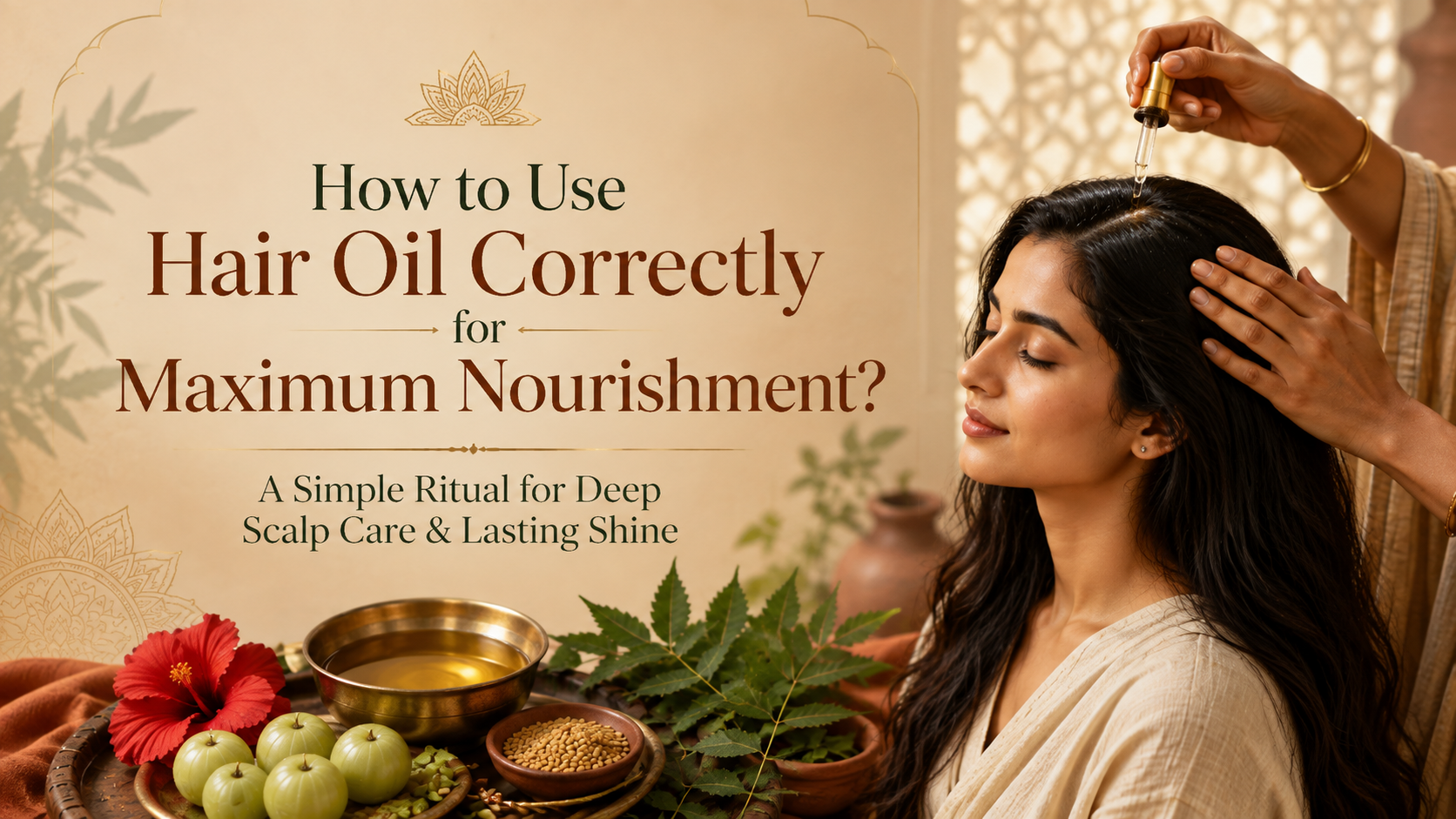
How to Use Hair Oil Correctly for Maximum Nourishment?
Hair oiling has been part of traditional beauty rituals for generations. From a mother gently massaging oil into her daughter’s scalp to botanical oils being prepared as family remedies, hair oiling has always been about more than beauty; it has been a ritual of care, nourishment, and consistency.
Today, hair oiling remains an important part of many natural hair care routines, especially for people looking to nourish dry hair, care for the scalp, and maintain healthy-looking hair
Why Is Hair Oiling Important?
Hair oil can help create a nourishing step in your hair-care routine. Depending on the ingredients and your individual hair needs, oils can help condition the hair, reduce the feeling of dryness, and make hair feel softer and smoother. A good hair-oiling routine also allows you to gently massage your scalp and slow down.
Choose the Right Hair Oil
The first step is selecting a hair oil that fits your hair-care goals and preferences. If you’re interested in botanical hair care, look for a formulation containing thoughtfully selected plant-based ingredients. Hair Health Root Revitalizer is a botanical concentrate handcrafted in the UAE and inspired by ancestral hair-care traditions.
Its formulation brings together 10 botanical ingredients, including:
- Soapnut
- Fenugreek
- Amla
- Aloe Vera
- Sidr Leaves
- Curry Leaves
- Resurrection Plant
- Vitamin E
- Mustard Seed Oil
- Rosemary Leaf Oil
The combination reflects Hair Health’s focus on bringing traditional botanical wisdom into a modern hair-care ritual.
How to Use Hair Oil Correctly for Hair Growth?
1. Start With a Small Amount
One of the most common hair-oiling mistakes is using too much oil.
- You don’t need to completely saturate your hair.
- Start with a small amount and add more only if necessary. The amount you need will depend on your hair length, thickness, texture, and scalp.
- Using too much can make the hair difficult to wash and may leave it feeling unnecessarily heavy.
2. Warm the Oil Between Your Palms
Instead of heating the oil directly, place a small amount between your palms and gently rub your hands together.
- This distributes the oil and makes application easier.
- With Hair Health Root Revitalizer, the brand recommends warming the oil slightly between your palms before beginning the ritual.
- Avoid applying very hot oil to your scalp.
3. Begin With the Scalp
If scalp nourishment is part of your hair-care routine, begin by gently applying the oil to the scalp.
- Use your fingertips rather than your fingernails.
- Move slowly across different sections of the scalp and use gentle circular motions.
- The purpose is to distribute the oil evenly while turning the application into a relaxing scalp-care ritual.
4. Massage Gently
Scalp massage is an important part of traditional hair oiling.
- Using gentle circular movements, massage the scalp for a few minutes.
- Avoid aggressive rubbing or scratching because excessive friction can cause irritation and unnecessary pulling on the hair.
- With Hair Health’s philosophy, the massage is not something to rush. It is a moment of slow beauty and self-care.
5. Apply Oil to the Hair Lengths
After applying oil to the scalp, you can distribute a small amount through the lengths of your hair if your hair type benefits from it.
- Pay attention to areas that feel particularly dry.
- You do not need to completely soak the hair. A light, even application is usually easier to manage and wash out.
6. Leave the oil on for the appropriate time.
How long should you leave hair oil on? Your ideal timing depends on your hair type, scalp preferences, lifestyle, and the instructions provided for the product you’re using. For Hair Health Root Revitalizer, the suggested ritual is to leave the oil on for 30–60 minutes or overnight for deeper nourishment, according to the brand’s directions.
7. Wash Your Hair Gently
- After oiling, wash your hair with a suitable shampoo.
- Hair Health recommends using a mild, sulfate-free shampoo as part of its ritual.
- You may need to shampoo more than once depending on the amount of oil used and your hair type.
- Avoid aggressively scrubbing the scalp. Gentle cleansing is generally enough to remove excess oil while maintaining a comfortable hair-care routine.
8. Condition Your Hair
- After shampooing, use conditioner if it is part of your normal routine.
- Apply conditioner primarily to the lengths and ends according to your hair’s needs.
- This can help make the hair feel smoother and easier to manage after washing.
Common Hair Oiling Mistakes to Avoid
- Using Too Much Oil
More oil doesn’t necessarily mean more nourishment. Start small and increase gradually if needed.
- Scratching the Scalp
Use your fingertips and gentle movements rather than your nails.
- Applying Extremely Hot Oil
Oil should never be uncomfortably hot when applied to the scalp.
- Leaving Oil on Without Considering Your Scalp
Longer isn’t always better for everyone. Pay attention to how your scalp feels and follow the product’s recommended usage.
- Expecting Instant Hair Growth
Hair growth is influenced by many factors, including genetics, nutrition, hormones, overall health, and hair-care practices.
Final Thoughts
Using hair oil correctly is about finding the right balance between the right product, gentle application, appropriate timing, and consistency. With Hair Health Root Revitalizer, that ritual is inspired by generations of botanical hair-care wisdom and brought into a modern UAE-crafted formulation.